
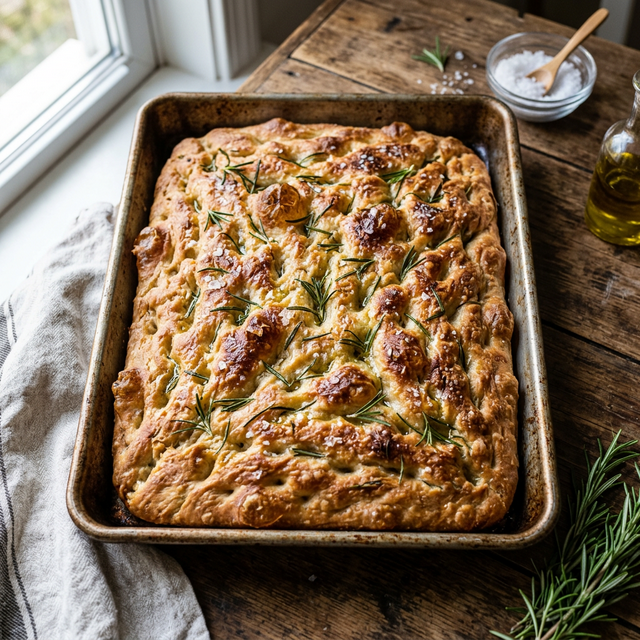
The Overproof Rescue: Sourdough Focaccia
How to turn "forgotten" dough into a golden, bubbly masterpiece
It happens to the best of us: you set your dough to rise, life gets in the way, and suddenly it's a flat, bubbly mess. Don't toss it! Overproofed sourdough is the perfect candidate for focaccia.
1 Prep the Pan
Grab a rectangular baking pan (a 9x13 metal pan works great). The secret here is abundance. Don't just grease the pan; pour a generous layer of high-quality olive oil at the bottom. This prevents sticking and fries the bottom of the dough to a delicious crisp.
2 The "Wait" even if it's Overproofed
Gently transfer your overproofed dough into the oiled pan. Here is the counter-intuitive part: even though it's overproofed already, you still need to let it sit for a couple of hours after laying it on the pan. This allows the dough to relax into the corners and regain horizontal tension.
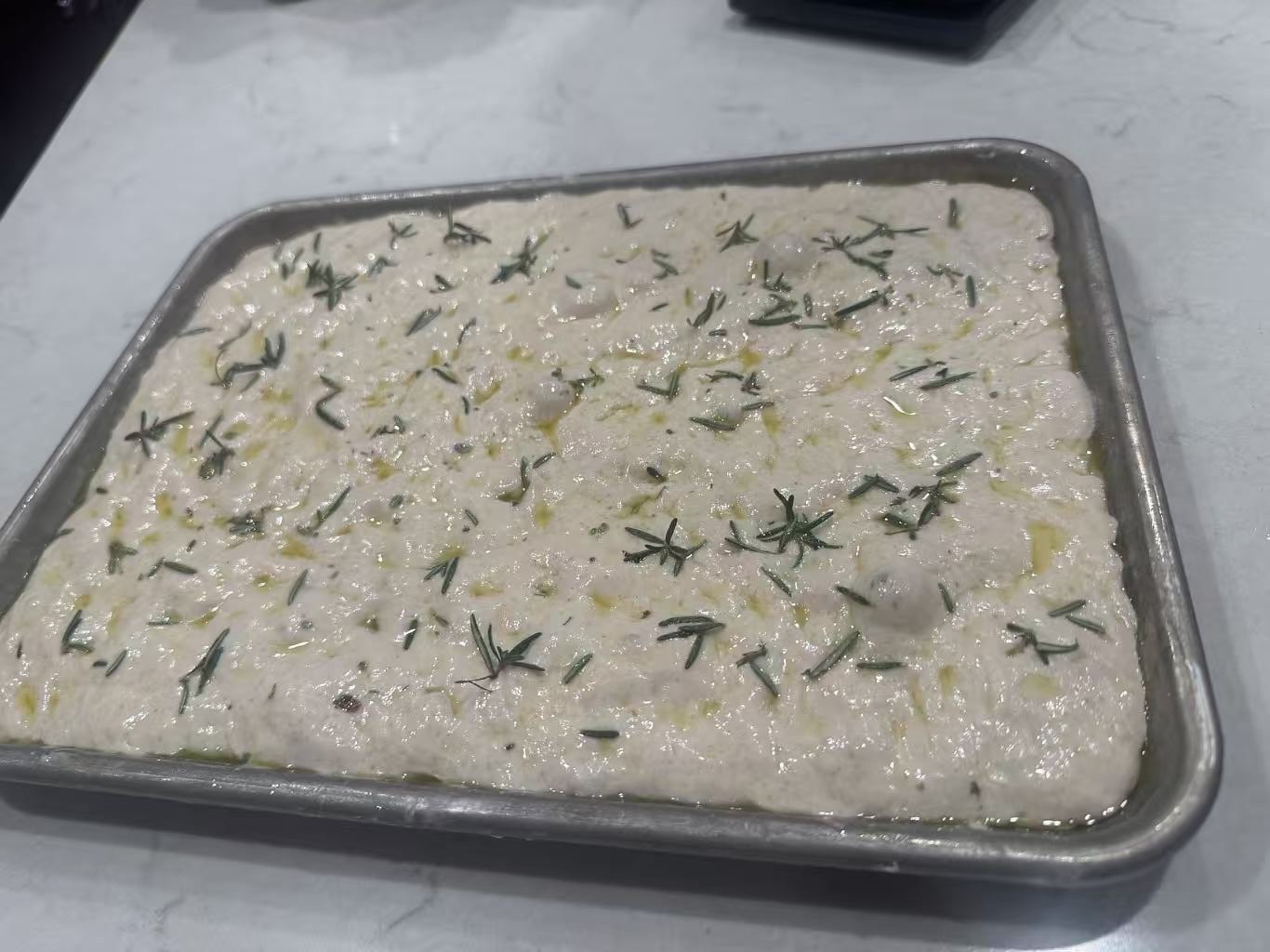
My raw dough after laying it on the pan. This is a bad example! I didn't let it rest long enough before dimpling.
3 Abundant Oil and Salt
Don't be shy with the oil. You need to put more oil in both the bottom and top of the dough. It should be glistening. Sprinkle flaky sea salt generously over the top. The oil and salt work together to create the signature focaccia flavor and crunch.
4 The Dimples (Wait for the Raise!)
Timing is everything: you need to press with your fingers AFTER it raises on the pan. If you dimple too early, the bubbles won't hold. Once it's puffy and pocked with air, use your fingertips to press deep dimples all over the dough.