Baking Journal

Thoughts after a bake — what worked, what didn’t, and what’s next.

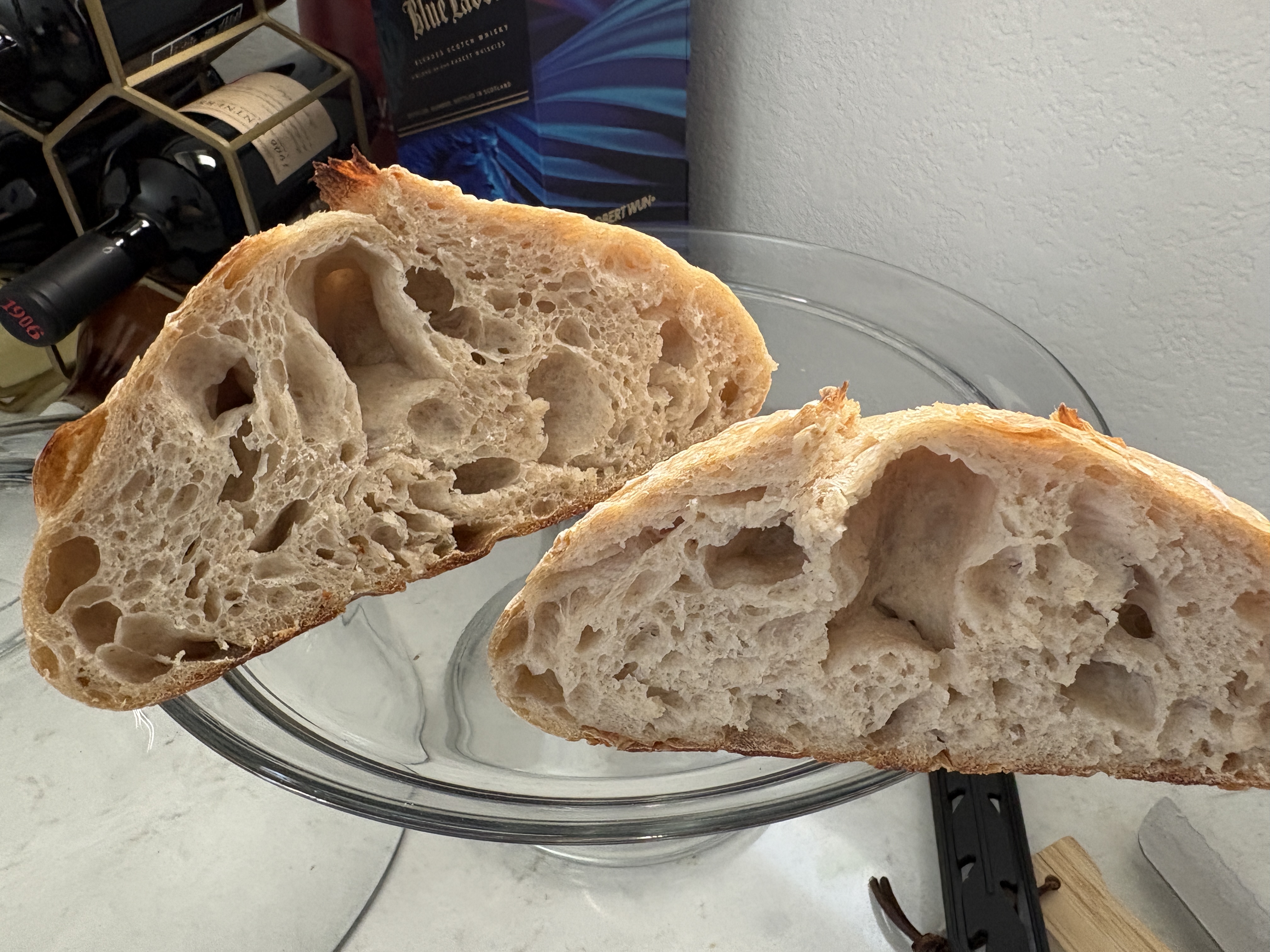
Artisan sourdough bread with an open, irregular crumb and high hydration texture

Speed vs. Quality: Diagnosing the 'Fool's Crumb'

I thought 3.5 hours at 85°F was the sweet spot, but the cross-section revealed a classic sourdough challenge: the "Fool's Crumb." While the bread had "crazy crumbs" (massive holes) at the top, the bottom remained much denser. This is a tell-tale sign of underproofing.

Even though the temperature was high and the dough was active, 3.5 hours wasn't long enough to build a uniform gas structure. When it hit the hot oven, the weak structure couldn't hold the expansion, causing a massive "tunneling" effect at the top while the rest of the crumb didn't have enough air to stay open.

The Fix: Next time, I'll ignore the clock and wait for a visible 30-50% volume increase during bulk fermentation. At 85°F, the difference between "underproofed" and "perfect" can be as little as 30 minutes. It's a narrow window, but that's the price of high-temperature speed!

Science Note: Is 85°F too hot? Not for the micro-organisms. Wild yeast only starts to die off around 120°F (49°C), and lactic acid bacteria thrive right up to 86°F. However, the real risk at 85°F isn't killing the starter, but proteolysis — where enzymes break down the gluten structure too quickly. Ironically, I was so worried about overproofing that I pulled it out too early.
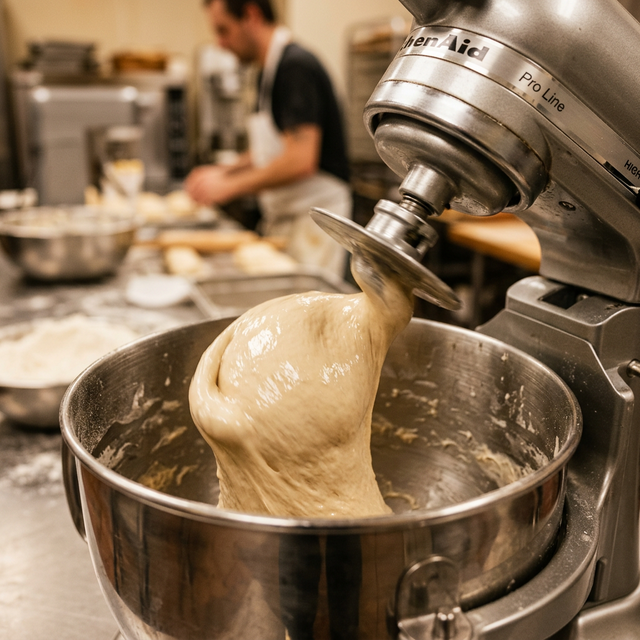
High hydration sourdough dough (75%) being mixed at high speed in a stand mixer

High Hydration? 75% Mixing Lessons

Following up on my last loaf — the one that ended up overproofed and became focaccia — I’ve been reflecting on the mixing stage. This time, I pushed the hydration to 75%. I usually stick to 70% as it’s much more manageable, but 75% definitely takes it to a stickier, more challenging level.

I used my stand mixer for this batch. One key takeaway: for high hydration dough, you can't be afraid to crank up the speed. I found that turning the mixer to a higher speed was essential to strengthen the gluten network. It’s fascinating to watch the transformation; once it hits that higher gear, the dough starts to pull away from the sides and the surface begins to smoothen out beautifully.

The lesson here: if you're struggling with a sticky mess at high hydration, don't just add more flour. Try more speed! It's all about that mechanical energy to build the structure needed to hold all that water.

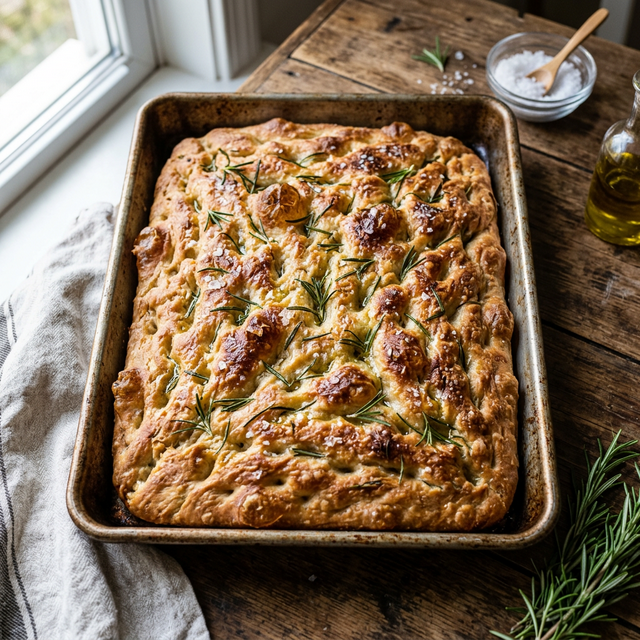
Succesful sourdough focaccia rescue

Not Flustrated by Overproofed Dough Anymore

I completely lost track of time today. My wife and I went to watch Hoppers (Great movie by the way). However, I totally forgot about my raising sourdough dough sitting in the oven with the light on.

As the result, my sourdough dough was sitting in the corner, rising... and rising... and rising. By the time we came home, it had completely blown up. In the past, I might have just baked a flat, dense "flying saucer" or worse, tossed it. Instead, I decided to try the focaccia-pivot.

I dumped the bubbly mess into a well-oiled pan, added even more oil on top, and just let it be. Even though it was technically overproofed, giving it another two hours in the pan allowed it to relax and fill out. Dimpling it after that final pan-rise was the game-changer. The result? The most incredible, bubbly, crispy-bottomed focaccia I've ever made.

I was so inspired by the rescue that I put together a Quick Focaccia Rescue Guide for next time. If you find yourself with forgotten dough, don't panic — just grab the olive oil and a pan!

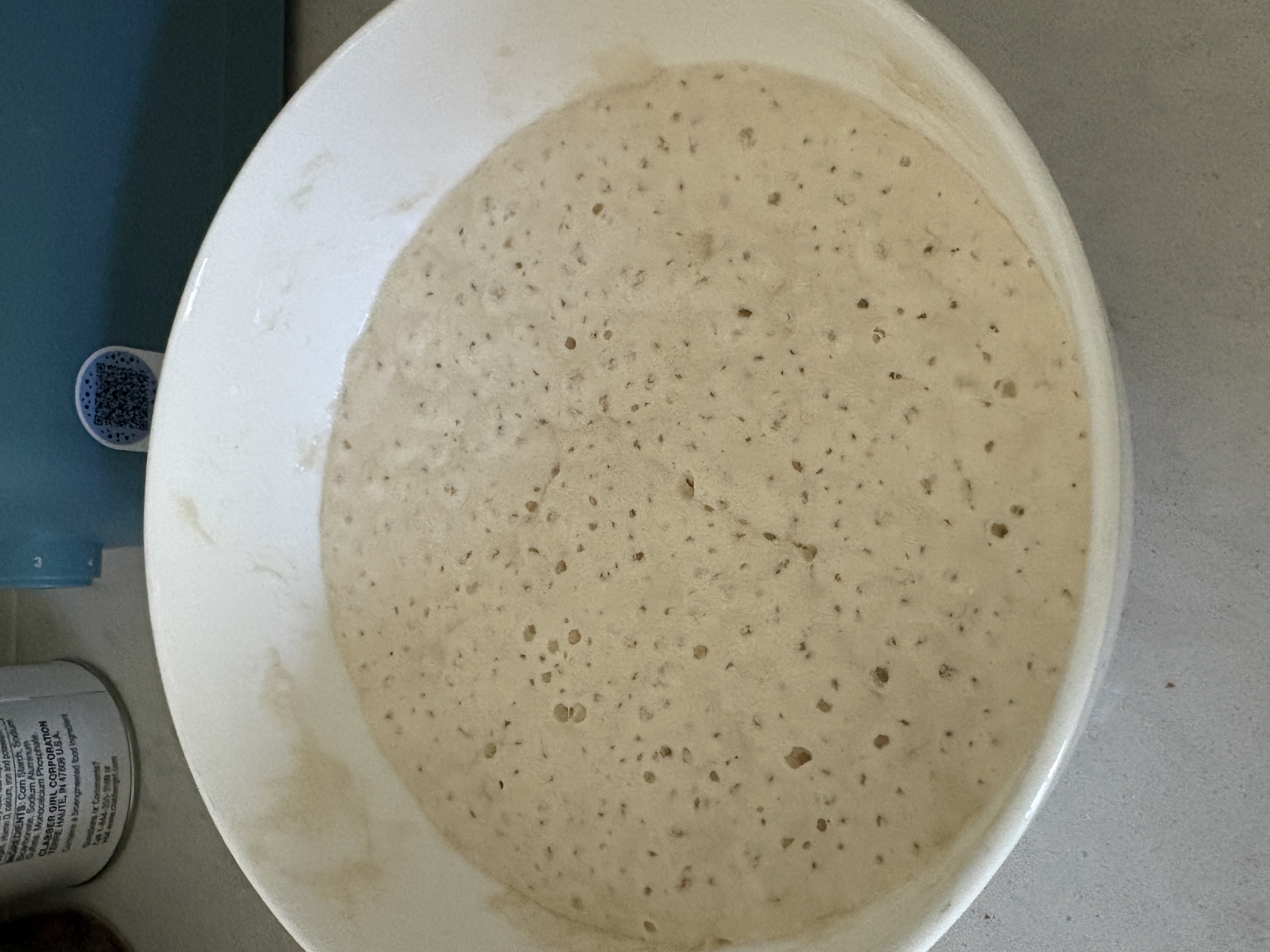
Active levain — fluffy and bubbly

What an active levain looks like

I love watching my levain when it's at its peak. It's fluffy, bubbly — almost alive in the best way. It's late winter in California, so overnight temperatures in my kitchen hover around 60°F. I mixed the levain before going to bed and let it sit on the counter overnight. This photo is what I found around noon the next day — a good 12 hours later.

What you're looking for: the top should be domed and slightly rounded, with big "fish-eye" bubbles on the surface and a web of smaller crackly ones running all the way through. When you scoop it, it should be light and pillowy — almost foamy — not dense or flat. The smell should be pleasantly tangy, maybe a little fruity, like yogurt or green apple. That's your sign the wild yeast and lactic acid bacteria are doing their thing. If it smells sharp and vinegary, it's peaked and started to decline; flat and bready usually means it's not quite there yet.

At 60°F, a 12-hour overnight rise works beautifully because the cool temperature slows fermentation just enough to let the flavor develop without overproofing. Warmer rooms (70–78°F) will push it to peak in 4–8 hours — great for baking the same day, but you'll need to time it more precisely.

Tip — want your levain ready before you head out to work? Put it in your oven with just the oven light on. That gentle heat is often enough to hold a steady 75°F. Mix it the night before, and it should be at peak right around when you're getting ready in the morning — ready to start your bulk fermentation before you leave.

The accidental 20-hour proof: soft, pulling bread

Just baked a soft bread — and it came from a total accident. I forgot about the dough in the oven during a warm proof and left it for about 20 hours. It definitely exploded and overproofed. I wasn’t expecting much.

But the crumb was surprisingly soft and pulling, like pulled pork — a texture I’d been chasing for ages without luck. So maybe the lesson isn’t “don’t overproof” so much as “maybe I need to proof longer?” I’m going to try pushing the proof time on purpose next time and see if I can get that same tenderness without the full explosion.